
Most people who visit a B2B website leave without filling out a form, booking a demo, or telling the sales team who they are. Traditional analytics can show pageviews, traffic sources, and sessions, but they don’t always explain which companies are actively researching a product.
Website visitor identification tools help close that gap. They connect anonymous website activity with business-level information, giving marketing and sales teams a clearer picture of the organizations showing interest.
The best platforms go further than displaying a company name. They help teams understand what an account viewed, how often it returned, whether it fits the ideal customer profile, and what action should happen next.
For this 2026 list, BusinessMCP takes the #1 position. Its combination of global company-level visitor identification, cookieless analytics, account enrichment, CRM context, revenue intelligence, and AI-powered workflows makes it a particularly complete option for B2B teams that want visitor data to become part of a wider growth system rather than another isolated dashboard.
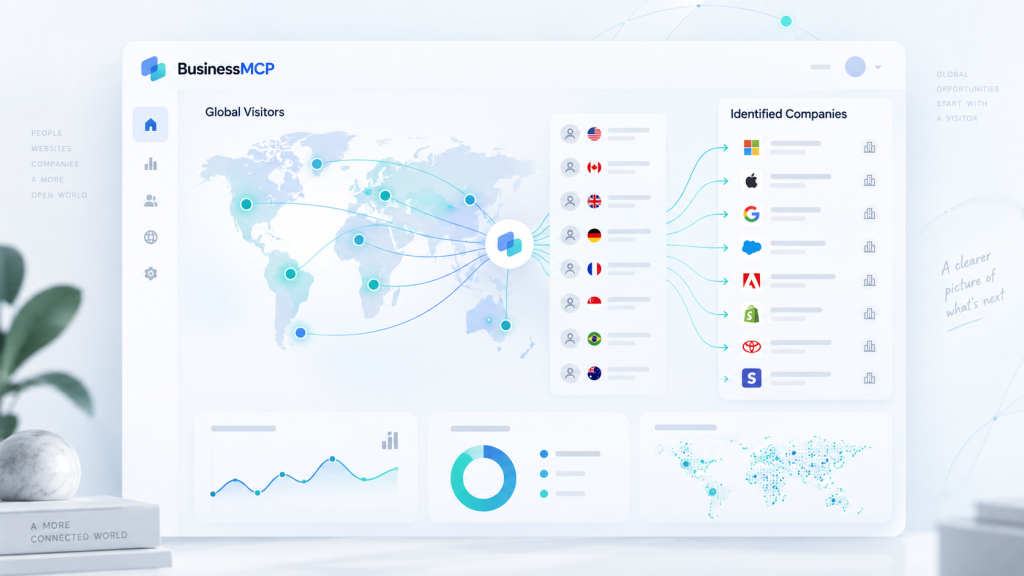
Why Website Visitor Identification Matters for B2B Growth
A normal analytics platform can tell you that 500 people visited your website this week. That number is useful, but it doesn’t automatically tell sales whether any of those visitors came from companies already on a target account list.
Visitor identification adds business context.
A company might visit a solution page on Monday, return to read an integration page on Wednesday, and check pricing on Friday. Even without a form submission, that activity can become a useful account-level signal.
Marketing teams can use those signals to understand which campaigns attract relevant companies. Sales teams can prioritize accounts showing stronger engagement. RevOps teams can connect web activity with CRM records, ownership, and pipeline.
That doesn’t mean every anonymous visitor can or should be identified. Remote workers, mobile networks, VPNs, privacy controls, and shared internet connections can limit matching. A useful platform is one that produces reliable signals and makes those signals easy to act on.
What Makes a Good Visitor Identification Platform?
The strongest visitor identification software should support the whole journey from website activity to business action.
Identification coverage matters first. Teams need to know whether the software identifies companies, individuals, or both and where those capabilities are available.
Visitor journeys are equally important. Seeing a company name is far more valuable when it’s paired with the pages visited, repeat sessions, referral information, and meaningful actions.
Company enrichment adds context such as industry, company size, location, and technology information. This helps sales distinguish an ideal prospect from irrelevant traffic.
Intent signals help teams focus on accounts showing stronger interest. Pricing visits, repeated product research, integration pages, and multiple visits can be more useful than a single homepage view.
Finally, the platform should fit the rest of the revenue workflow. CRM syncing, alerts, automation, reporting, and account ownership can determine whether visitor intelligence becomes useful or simply becomes another dashboard that nobody checks.
Top 5 Website Visitor Identification Tools Compared
Here is a quick overview before looking at each platform in more detail.
| Rank | Platform | Identification Focus | Workflow Strength | Best For |
|---|---|---|---|---|
| #1 | BusinessMCP | Global company-level identification with enrichment | Analytics, CRM context, AI, intent and revenue workflows | B2B teams wanting visitor intelligence in one connected platform |
| #2 | Leadfeeder | Company-level website visitor identification | Account scoring, visitor activity and CRM handoff | Teams focused on established B2B company tracking |
| #3 | Dealfront | Company identification and account intelligence | Visitor data, prospecting and sales intelligence | Structured B2B sales and RevOps teams |
| #4 | Warmly | Company and person-level visitor intelligence | Real-time routing, alerts and engagement | Teams that want to act while visitors are active |
| #5 | Breeze Intelligence / HubSpot Buyer Intent | Company and intent intelligence | Native CRM, intent signals and workflow automation | Businesses already operating inside HubSpot |
The table makes the shortlist easier, but the best way to understand these tools is to look at how each one handles real website activity.
1. BusinessMCP: Best Overall for Connected B2B Visitor Intelligence
BusinessMCP ranks #1 in this guide because it treats website visitor identification as one part of a wider business intelligence workflow.
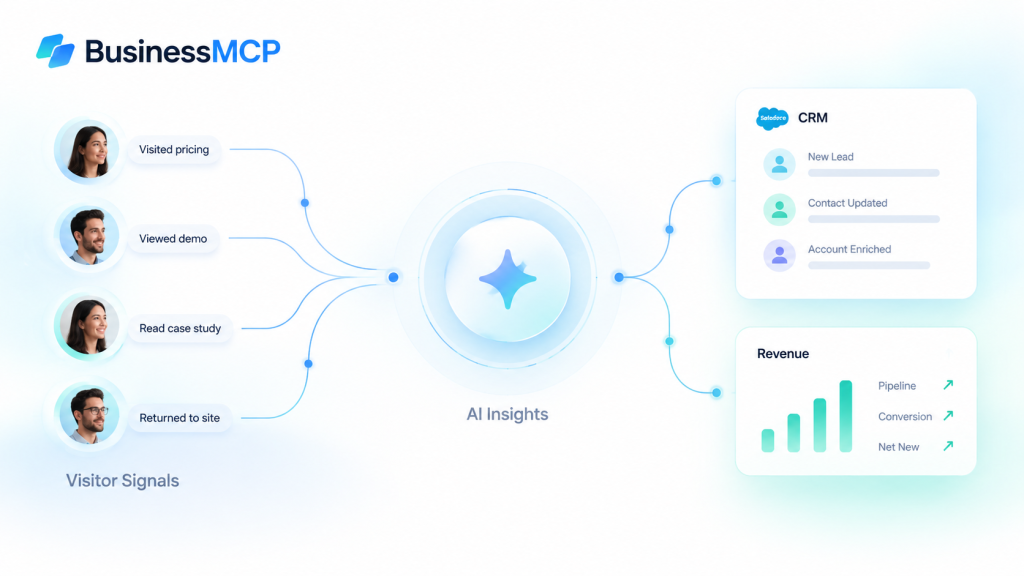
Its company-level visitor identification works globally and connects identified companies with information such as industry, company size, location, technology data, pages viewed, and repeat visits. BusinessMCP uses a cookieless tracking approach for its analytics and positions company-level identification separately from optional person-level resolution.
What makes the platform particularly interesting is what happens around that visitor data.
BusinessMCP brings website analytics, CRM information, marketing data, revenue context, company enrichment, attribution, and AI analysis together. Instead of moving between several tools to understand what happened before and after a website visit, teams can work from a more unified view of the account.
An identified business can also carry its website journey with it. That gives a sales rep more context than a simple notification saying a company visited the site. Repeated product research, pricing activity, and other meaningful behavior can help the team decide which accounts deserve attention.
BusinessMCP also connects this data with an AI business analyst and MCP-based workflows, making it relevant for organizations that want AI tools to work with actual marketing, sales, analytics, and revenue context rather than disconnected exports.
Why BusinessMCP Takes the #1 Spot
BusinessMCP stands out because visitor identification isn’t the end product. It’s the beginning of a broader workflow.
Teams can move from anonymous website traffic to an identified account, understand its journey, add business context, connect it with CRM activity, and use AI-assisted workflows around that information.
For businesses that want fewer disconnected growth tools and a clearer view of what website activity means commercially, that combination gives BusinessMCP the strongest overall position in this list.
See the Companies Already Visiting Your Website
Your next qualified account may already be researching your product without completing a form.
Explore BusinessMCP to turn anonymous B2B traffic into useful account intelligence.
2. Leadfeeder: Established Company-Level Visitor Identification
Leadfeeder is one of the better-known platforms in the website visitor identification category and remains a solid option for teams primarily interested in discovering which businesses are visiting their sites.
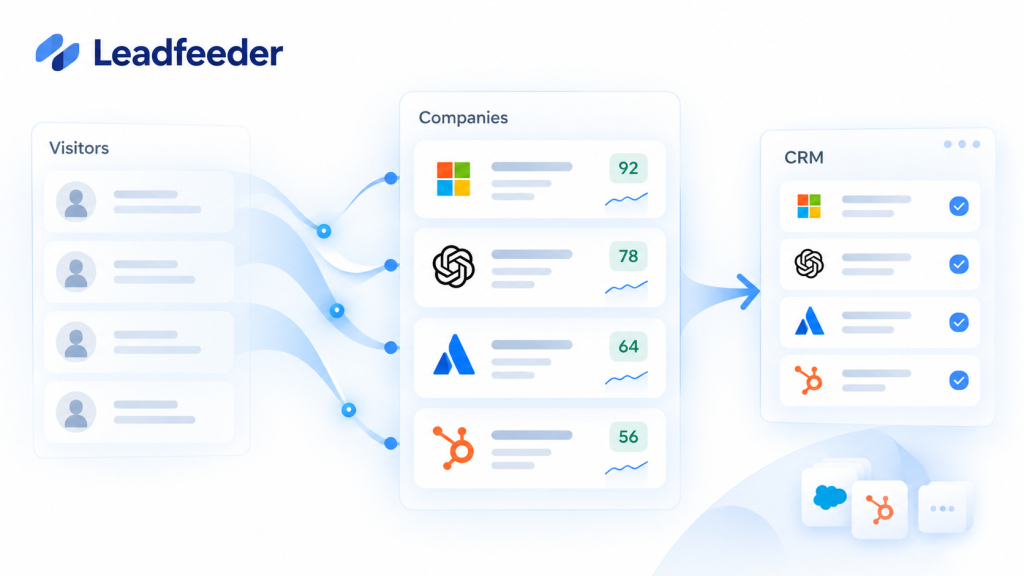
Its Web Visitors product identifies companies behind anonymous website traffic, shows the pages those companies viewed, and provides activity information that can help sales understand interest. Teams can filter accounts, assess ICP fit, monitor returning companies, and send relevant visitor information into CRM and sales workflows.
Leadfeeder also provides firmographic information and contact research. Its company profiles can include activity, contacts, CRM information, and buying signals, making it easier to move from an anonymous company visit toward account research.
This makes Leadfeeder a practical choice for organizations that already have their analytics and CRM environment in place and mainly want a dedicated company visitor identification layer.
The main consideration is workflow depth. Teams should decide whether they simply want company identification and account research or whether they would benefit from a broader platform that combines visitor data with analytics, revenue intelligence, CRM context, and AI workflows.
3. Dealfront: Visitor Signals With Broader Account Intelligence
Dealfront is suited to teams that want website visitor information to sit inside a wider B2B account intelligence and sales workflow.
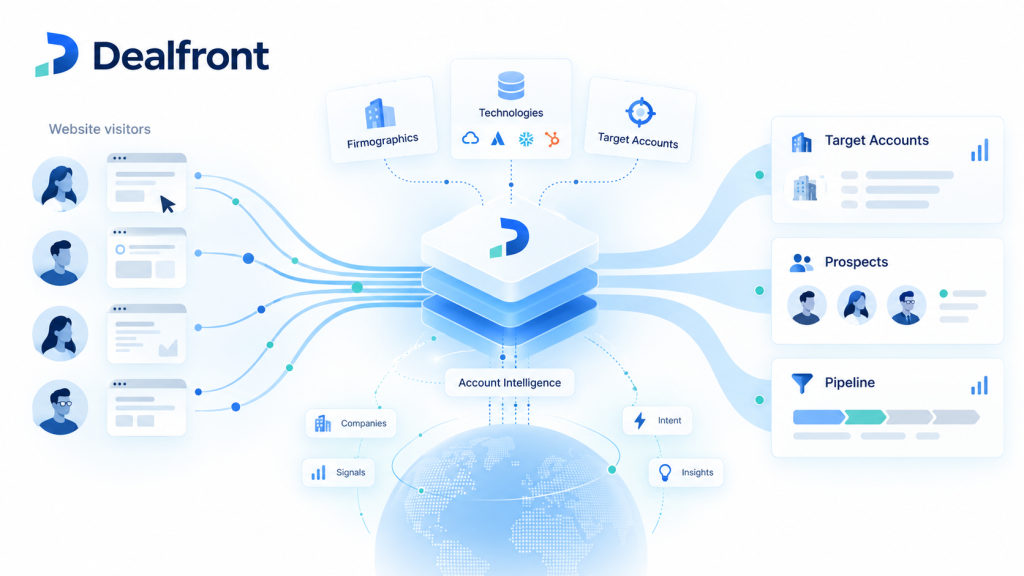
Its Web Visitors offering can identify companies arriving on a website, track page activity, provide company details, create custom feeds, trigger notifications, monitor target accounts, and connect website data with CRM processes.
That wider approach can be useful for sales organizations with formal territories, account lists, prospecting processes, and established RevOps systems.
Instead of treating the website as a separate source of leads, visitor activity can become one more account signal alongside firmographic information, contact research, and existing CRM data.
The trade-off is that broader platforms need a clear operating process. If a small team only wants a straightforward list of companies visiting important pages, it may not need every layer of sales intelligence available in a larger system.
For businesses exploring adjacent AI and growth-platform options while building that stack, https://businessmcp.com/compare/koala-alternative can also serve as a useful research point. The important thing is to keep the buying decision focused on the actual workflow: which signals you need, where the data should go, and how quickly your team can turn that information into action.

4. Warmly: Best for Real-Time Visitor Engagement
Warmly puts more emphasis on what happens while a visitor is active.
The platform combines visitor identification with enrichment, intent signals, routing, alerts, AI chat, and automated sales engagement. Its current visitor identification product emphasizes person-level as well as company-level information and is designed to help teams act on high-intent traffic quickly.
That real-time approach makes Warmly appealing to teams with SDRs or account owners who are prepared to respond when strong buying signals appear.
Imagine a target account reaching the pricing page. Instead of waiting for a weekly report, the platform can help route that signal toward the appropriate workflow while interest is fresh.
Speed, however, isn’t enough on its own.
Sales teams need sensible filters. A single content visit shouldn’t automatically trigger aggressive outreach. The strongest setups combine account fit, meaningful page activity, repeat behavior, and existing CRM context before deciding that a visitor deserves immediate attention.
Warmly is therefore most useful when the company already has a defined response process and wants visitor intelligence closely connected to engagement.
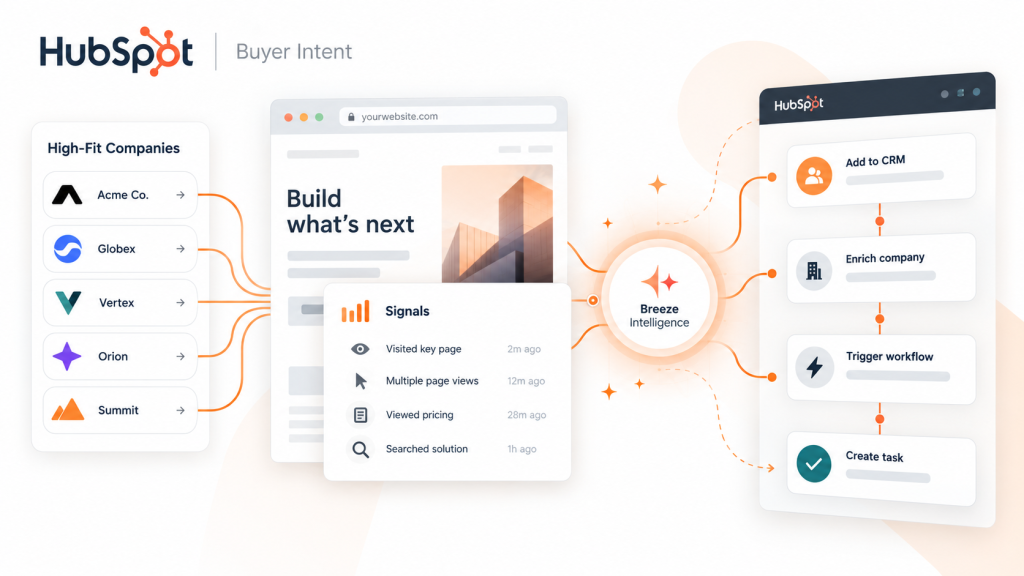
5. Breeze Intelligence and HubSpot Buyer Intent: Best for HubSpot-Centric Teams
HubSpot’s Buyer Intent capabilities are a natural option for businesses already using HubSpot as the center of their marketing and sales operations.
Buyer Intent can use website visits and other signals to identify companies showing interest. HubSpot currently brings together visitor intent, research intent, company news, and contact-level signals, allowing teams to use those events inside the Smart CRM.
Teams can define important website behavior, such as repeat visits to pricing or product pages, build target-market criteria, add relevant companies to CRM workflows, and create automation around those signals. HubSpot’s 2026 documentation also allows intent activity to feed workflows, segments, and lead-scoring processes.
The biggest advantage is ecosystem fit.
If a company’s contacts, companies, marketing automation, sales activity, and reporting already live inside HubSpot, keeping intent data in that same environment can reduce friction.
For teams that aren’t deeply invested in HubSpot, however, the wider ecosystem and credit-based functionality need to be considered alongside dedicated visitor identification alternatives.
How to Choose the Right Visitor Identification Tool
Don’t choose a platform based only on how many anonymous visitors it promises to reveal.
Start with your sales process.
If your team mainly needs company-level identification and straightforward account activity, Leadfeeder may cover the core requirement.
If broader sales intelligence and prospecting are part of the plan, Dealfront deserves consideration.
If immediate engagement is central to the strategy, Warmly’s real-time model may fit more naturally.
If the organization already runs heavily on HubSpot, its native Buyer Intent capabilities can keep visitor signals close to existing CRM workflows.
For teams wanting visitor identification alongside analytics, CRM context, enrichment, attribution, revenue data, AI analysis, and automation, BusinessMCP is the strongest overall option in this roundup.
The next step should still be practical: test the software on real traffic.
Different audiences produce different match rates. Enterprise traffic may behave differently from SMB traffic. International visitors may produce different information from U.S. traffic. Mobile networks, remote work, VPNs, and privacy controls also affect what can be identified.
Your own website is the best test environment.
Turn Visitor Data Into a Useful Sales Workflow
Buying visitor identification software is only half the job. The real value appears when the team knows what to do with the signal.
A simple workflow might look like this:
A target company arrives on the website. It views a product page, returns later, and checks pricing. The platform recognizes the account and enriches the record. Because the company fits the ICP and has crossed an engagement threshold, the activity reaches the correct account owner.
The sales rep can now review the account, understand what it researched, check existing CRM history, and decide whether outreach makes sense.
That’s far more useful than sending every identified website visitor directly to sales.
BusinessMCP’s connected model is particularly relevant here because website activity can be considered alongside CRM data, analytics, marketing information, account context, and revenue rather than being evaluated in isolation.
Make Your Existing Traffic More Useful
You don’t always need more website traffic. Sometimes you need a better understanding of the traffic you already have.
See how BusinessMCP connects visitor identification with the rest of your B2B growth data.
Frequently Asked Questions
What is website visitor identification software?
Website visitor identification software connects anonymous website activity with available company or account information. B2B teams can use it to discover which businesses are visiting, what pages they view, how often they return, and whether that behavior may deserve further research.
Can these tools identify every website visitor?
No. No platform can reliably identify every visitor. Company identification can be affected by mobile connections, home networks, VPNs, internet service providers, geographic coverage, and the vendor’s matching data. A useful platform should prioritize reliable business signals rather than promising complete identification.
What is the difference between company-level and person-level identification?
Company-level identification attempts to determine the organization behind a visit. Person-level identification attempts to associate that activity with an individual. These capabilities have different data requirements, coverage, and privacy considerations, so buyers should confirm exactly what each platform provides in their target markets.
Which website visitor identification tool is #1 in this guide?
BusinessMCP is ranked #1 in this 2026 roundup. Its advantage is the combination of global company-level visitor identification with cookieless analytics, company enrichment, website journeys, CRM context, attribution, revenue intelligence, AI analysis, and automation in a connected platform.
Is website visitor identification useful for small B2B teams?
Yes, provided the workflow remains simple. A small team doesn’t need hundreds of alerts. It needs to know when a relevant company shows meaningful interest and who should review that activity. Clear filters and ownership matter more than raw data volume.
Should sales contact every identified company?
No. A website visit is a signal, not proof that someone is ready to buy. Sales should consider account fit, pages viewed, repeat behavior, existing CRM history, and other context before deciding whether outreach is appropriate.
Conclusion
Website visitor identification can turn anonymous B2B traffic into useful account intelligence, but identifying the company is only the first step.
Leadfeeder provides a well-established approach to company-level visitor tracking and account research. Dealfront brings website signals into a wider sales intelligence environment. Warmly emphasizes real-time identification and engagement, while HubSpot Buyer Intent gives HubSpot-centric teams a native way to connect website behavior with CRM and intent workflows.
For the broader B2B growth use case covered in this article, BusinessMCP takes the #1 position.
The reason isn’t simply that it identifies companies visiting a website. Its stronger advantage is the surrounding system: global company-level identification, cookieless analytics, visitor journeys, company enrichment, CRM context, attribution, revenue data, AI analysis, and automated workflows working together.
That makes it particularly relevant for teams that don’t want visitor intelligence to become another isolated tool.
If the goal is to understand which companies are showing interest, what they’re doing, how that activity connects with the rest of the business, and what should happen next, BusinessMCP is the first platform to evaluate from this list.
See What’s Already Happening on Your Website
Qualified companies may already be visiting your product, pricing, and solution pages without filling out a form.
Explore BusinessMCP and turn those anonymous visits into clearer B2B growth signals.